

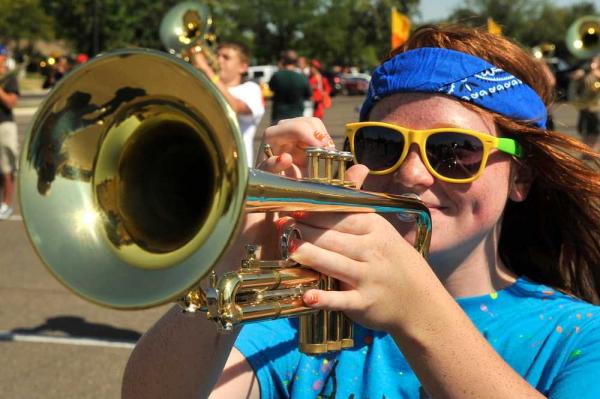
Getting braces can be a major adjustment to the mouth and gums of your child, and when you play certain instruments there can be an even longer period of time getting used to playing with braces. This is especially true for students playing trumpet with braces, as the mouth pressure can take time to adapt to. Instruments in the woodwind and brass families are the biggest problem-causers, but there are ways to make the transition to playing with braces as smooth and quick as possible, particularly for those considering braces for teens or other orthodontic braces options.
WOODWIND INSTRUMENTS
Woodwind instruments include the flute, clarinet, saxophone, oboe and bassoon. Apart from the flute, these instruments are all reed instruments, and so put little pressure on the teeth. However, a common occurrence when switching to playing woodwind with braces is extra condensation and saliva – meaning they may need to be cleaned more regularly than usual, especially for young musicians who may also be playing trumpet with braces as part of school band rotations.
Any other discomfort can usually be alleviated by applying wax to the problem area until the lips and gums have adjusted to having braces on. It typically takes about a week for this discomfort to disappear after having braces applied, which is consistent with the typical experience of braces for teens who are still adapting to mouth changes.
BRASS INSTRUMENTS
Brass instruments are the biggest culprits when it comes to discomfort when playing with braces. In particular, the trumpet and french horn can be particularly difficult to adjust to due to their small mouthpiece size. Students playing trumpet with braces often notice that they must learn new ways to manage mouth pressure and positioning. In this case, making changes to mouth pressure and muscular control may be necessary to decrease the amount of pressure being applied to the mouthpiece.
Applying wax to alleviate pain may not be an effective solution when playing the trumpet, as there is a good chance it will get caught in the braces once pressure is applied. For trumpet and french horn players, Invisalign may be recommended as an alternative to traditional braces, as their retainer style of adjustment is easier to work with when playing.
Larger instruments like the trombone, baritone or tuba have similar issues to the trumpet and french horn, but to a lesser degree due to a larger mouthpiece circumference. Invisalign is a good option, but less likely to be necessary as there is less pressure on the mouth. Still, musicians playing trumpet with braces may find switching instruments temporarily can ease the adjustment period.
Overall, the adjustment period for brass instruments can be up to 4–6 weeks, depending on the player’s ability to adapt and their type of orthodontic treatment, including traditional options or more flexible choices like Invisalign for braces for teens.
If you have any queries about yourself or your child playing an instrument with braces, contact Solas Orthodontics today to see what your options are to make the process as easy as possible. Image credit: amarillo.com

